PhD Student · Computational and Data Enabled Sciences

Aneesh Krishna

I'm a PhD student at the University at Buffalo (SUNY), advised by Prof. Ashlee N. Ford Versypt in the Systems Biomedicine and Pharmaceutics Lab.

My research is in scientific machine learning. I build Bayesian optimization and Gaussian process surrogate methods that calibrate expensive, stochastic biological simulations. Right now I'm teaching agent based models of collective cancer cell invasion to reproduce real microscopy data in far fewer simulator runs than a brute force search.

Before my PhD I worked on intrusion detection for advanced persistent threats and ransomware using NLP, and built systems powered by large language models and retrieval augmented generation in industry. I completed my MS in Data Science at UB in 2024.

  • Bayesian Optimization
  • Gaussian Processes
  • Agent Based Modeling
  • Simulation Based Calibration
  • Scientific ML
  • Computational Biology
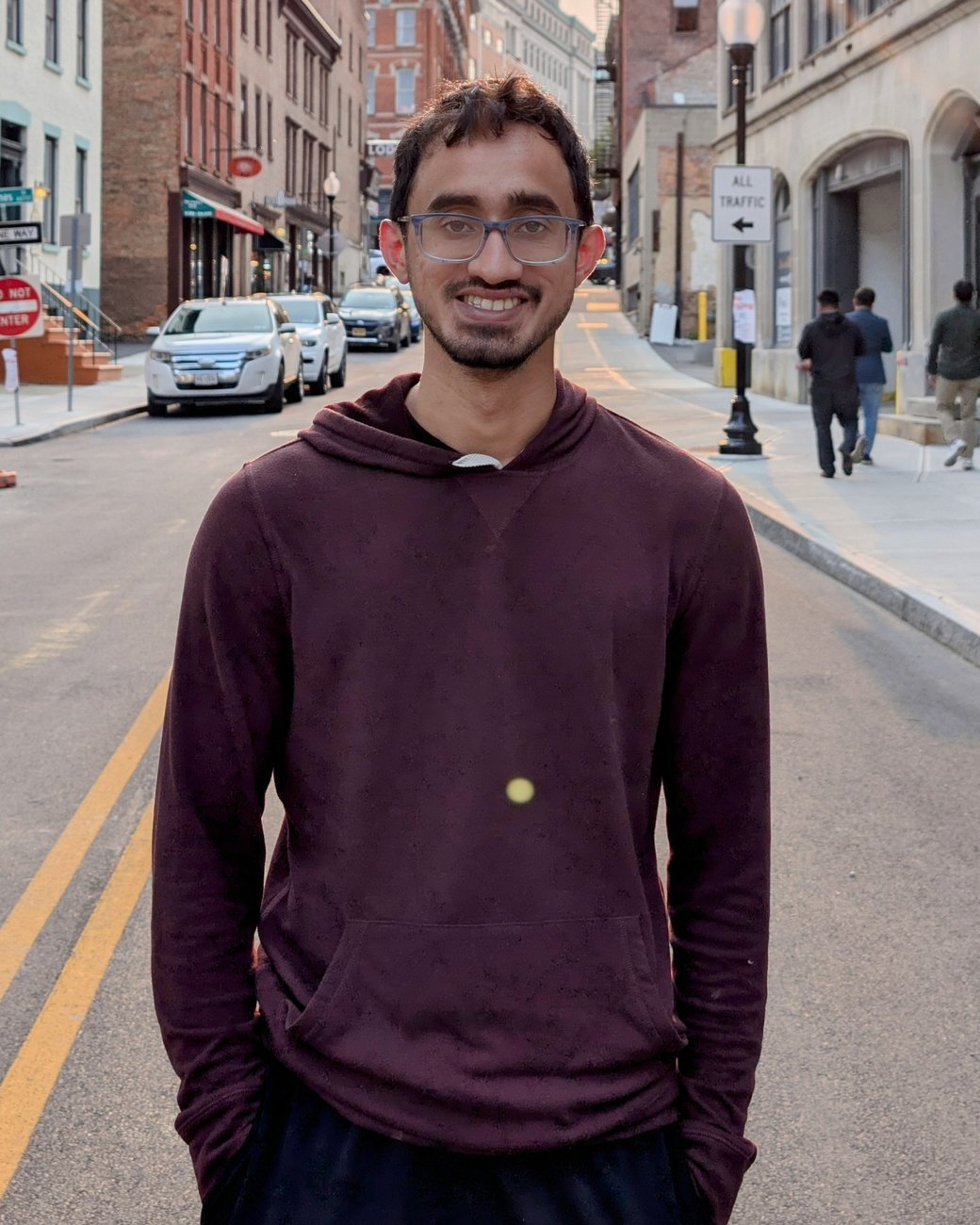
Aneesh Krishna standing on a city street at sunset

News

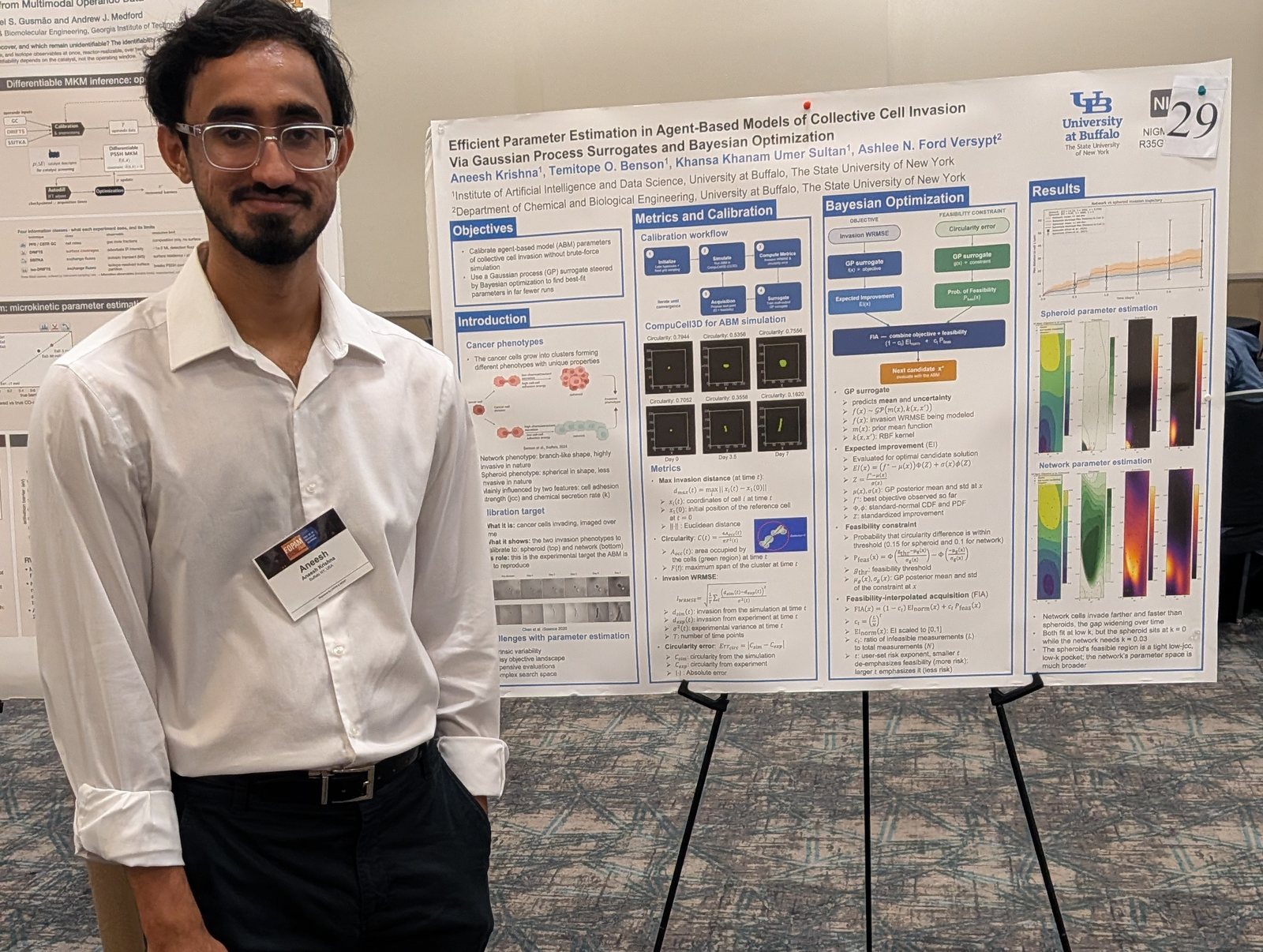
  • Jul 2026 Upcoming Presenting our collective cell invasion calibration poster at FOPAM 2026 (Foundations of Process/Product Analytics and Machine Learning), Decatur, GA, on July 26.
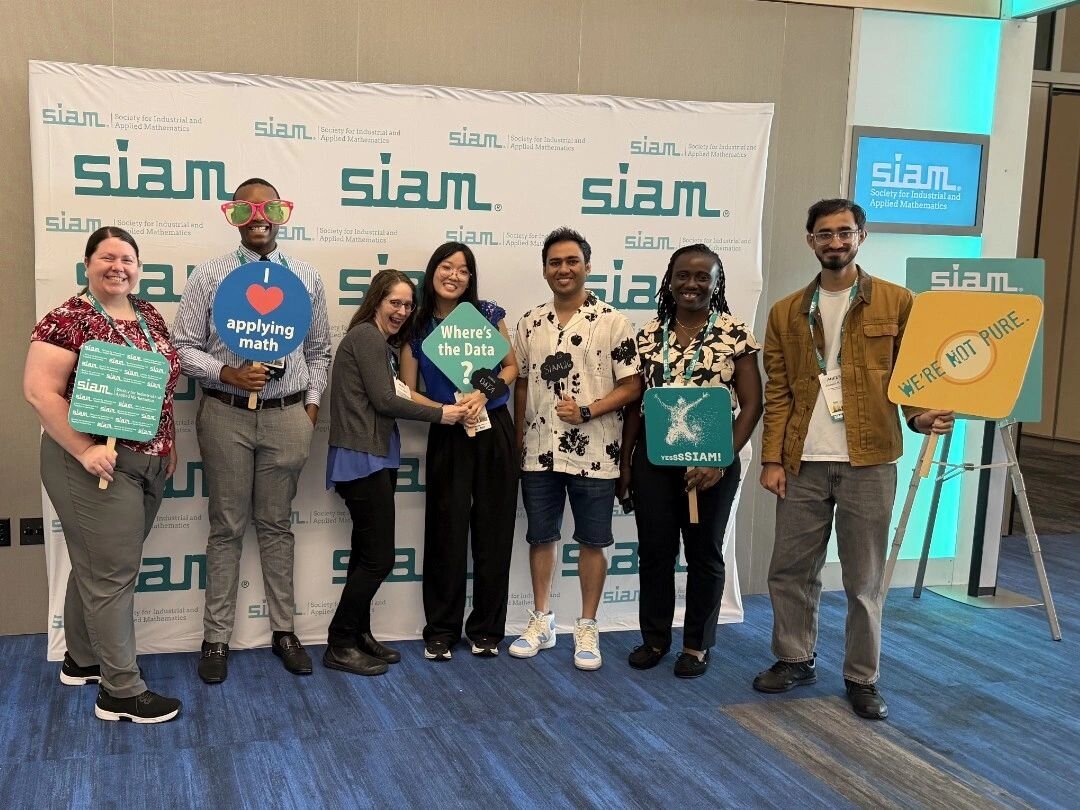
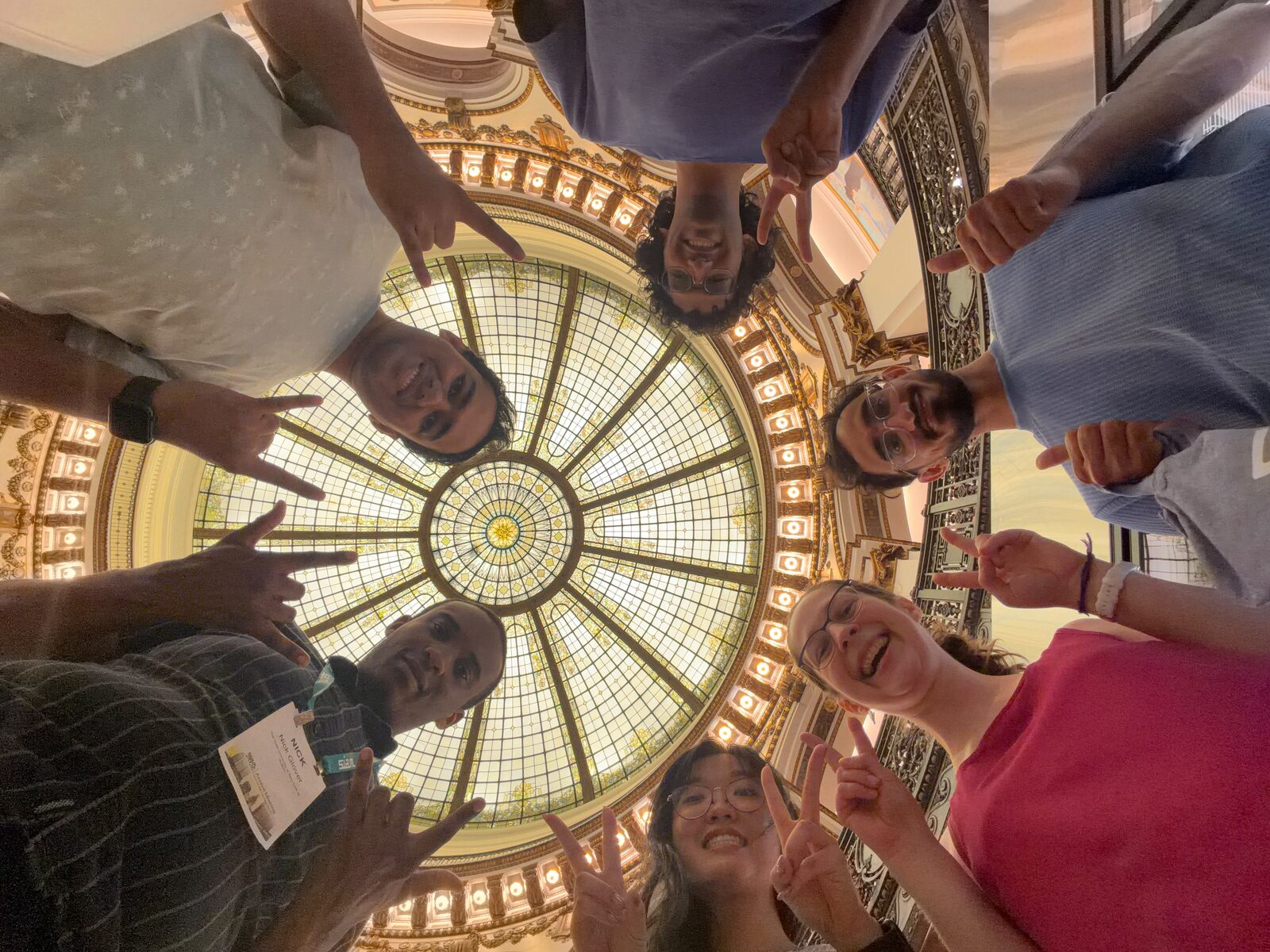
  • Jul 2026 Presented our collective cell invasion calibration work as a poster at the SIAM Conference on the Life Sciences (LS26) in Cleveland, OH.
  • Feb 2026 Gave a lightning talk on AI driven calibration of cell invasion models at a University at Buffalo CDSE student research session.
  • Jan 2026 Started my PhD in Computational and Data Enabled Sciences at the University at Buffalo.
  • Jun 2025 Presented at the 20th Annual Symposium on Information Assurance (NYS Cybersecurity Conference), Albany, NY.
  • Dec 2024 Completed my MS in Data Science at the University at Buffalo.

Research

I work at the intersection of machine learning and mechanistic simulation. I use surrogate models and Bayesian methods to make expensive scientific simulators tractable to calibrate, and I bring the same rigor to security and applied AI systems.

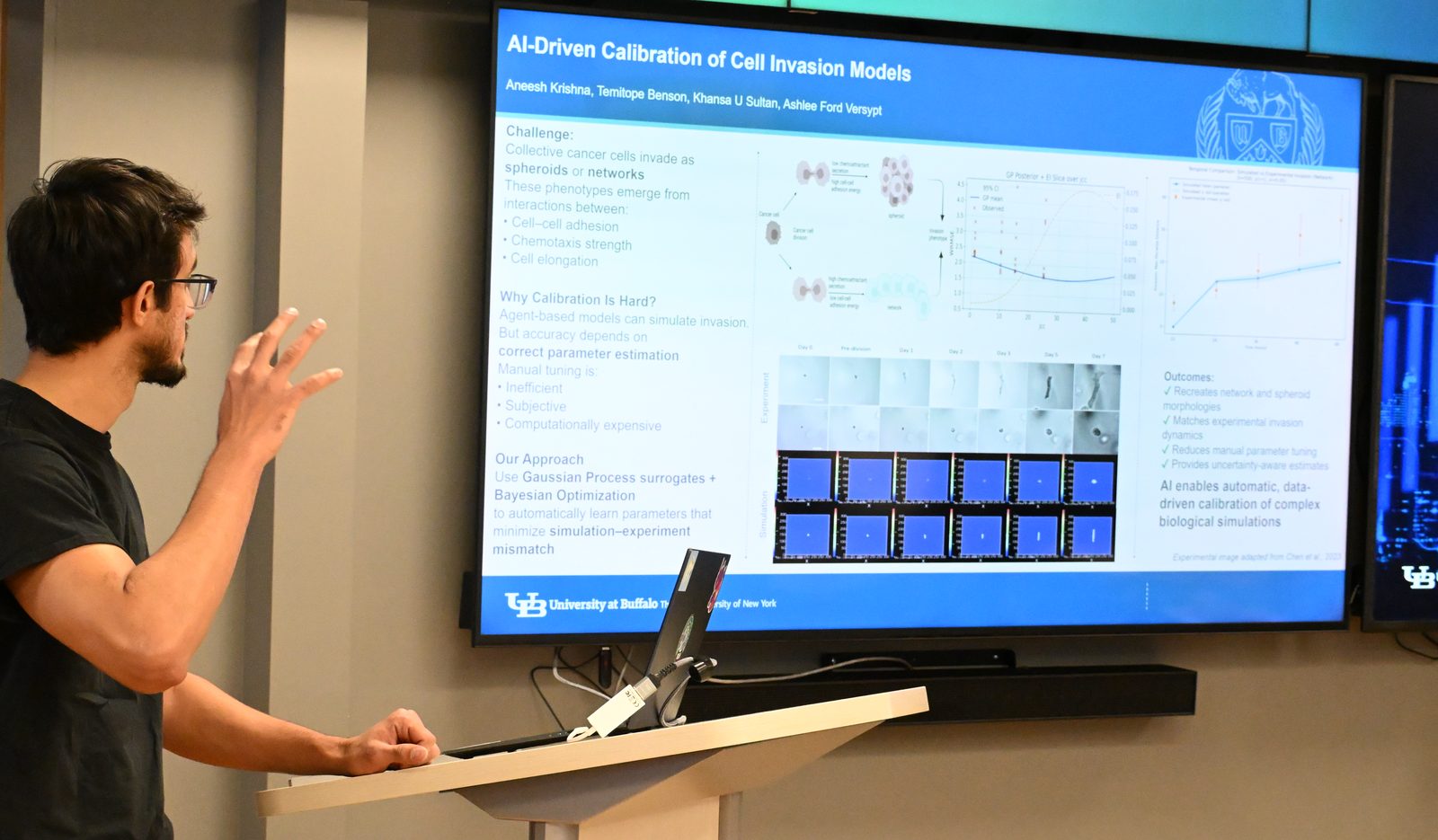
Aneesh presenting the cell invasion calibration project beside his slide
Current focus

Calibrating agent based models of collective cancer cell invasion

Collective cancer cells invade tissue as either compact spheroids or branching networks, and agent based models (in CompuCell3D) can simulate both. The catch is that accuracy depends on parameters that are hard to tune: cell adhesion strength, chemoattractant secretion rate, and chemotactic strength. Tuning them by hand is slow, subjective, and computationally expensive.

I built a constrained Bayesian optimization framework with Gaussian process surrogates and a feasibility aware acquisition function (Expected Improvement combined with probability of feasibility) that calibrates these models against experimental microscopy data. It recovers parameter sets that reproduce both the invasive network phenotype and the non invasive spheroid phenotype, with uncertainty aware estimates and far fewer simulator evaluations than grid or Monte Carlo search.
Bayesian OptimizationGaussian ProcessesCompuCell3DAgent Based Modeling
Security research

SCARLeT: detecting advanced persistent threats from system call behavior

For host based intrusion detection I developed a process lineage labeling method for Windows system call telemetry. It reconstructs each attack's process tree and labels activity by what actually spawned it rather than by how the command text looks, which catches attacks that hide behind ordinary tools like PowerShell and cmd.

I built the resulting dataset (4.4 million events across 20 APT and ransomware families) with splits that hold out whole attack families, then trained and evaluated NLP and machine learning detectors to measure how well detection generalizes to families the model has never seen. The work is available as the SCARLeT preprint.

NLPIntrusion DetectionTF-IDFscikit-learn
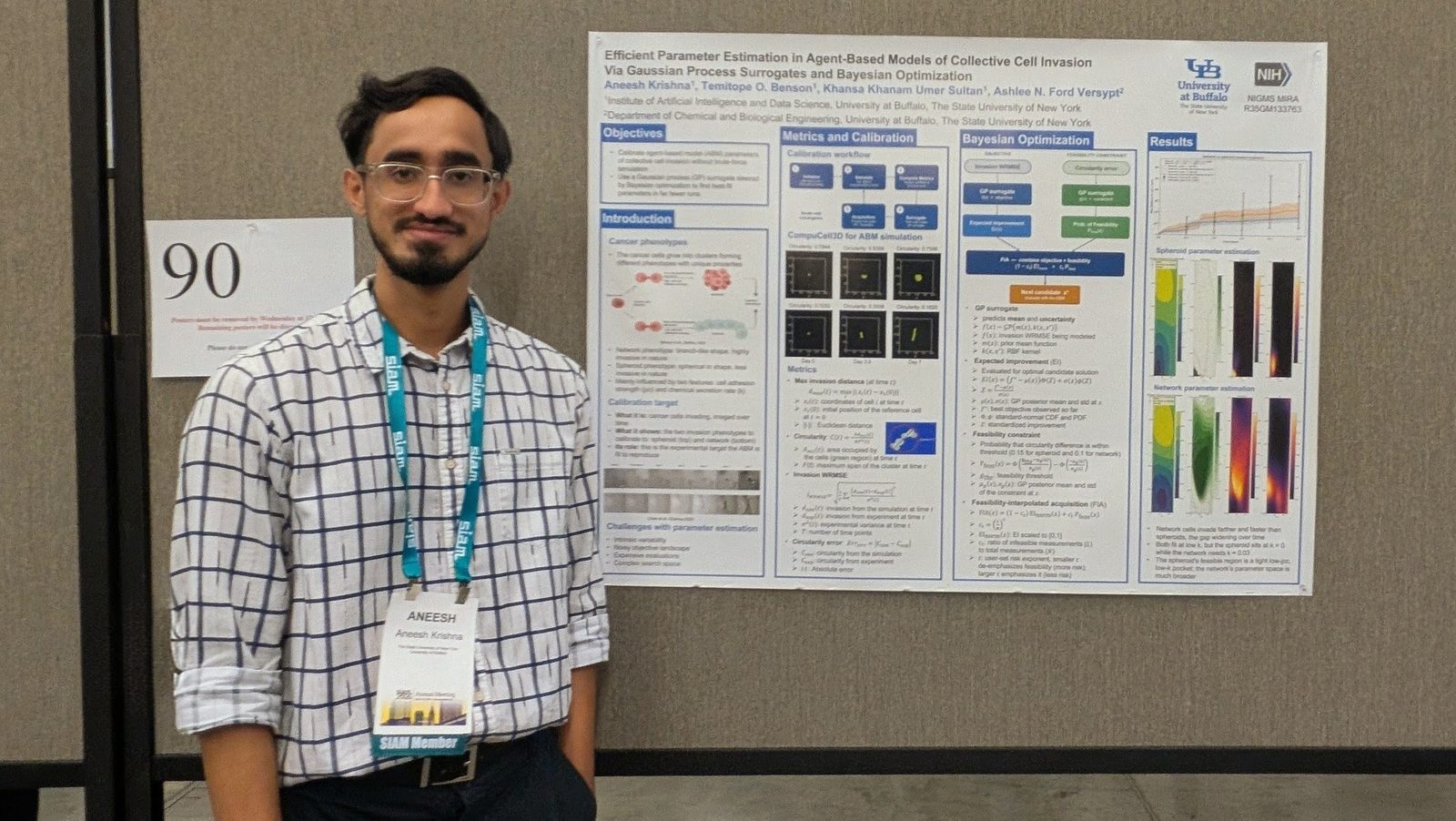
Aneesh next to his research poster at the SIAM Conference on the Life Sciences
Presenting the collective cell invasion work at SIAM LS26, Cleveland, OH (2026).

Publications

  1. 2026
    Preprint

    SCARLeT: System-Call Analysis for Robust AI Learning-based Detection of Advanced Persistent Threats

    Aneesh Krishna, Rudra Prasad Baksi, Mangolika Bhattacharya, and Shambhu Upadhyaya

    SSRN preprint, 2026.

  2. 2025
    Book chapter

    Next-Gen 3rd Party Cybersecurity Risk Management Practices: AI Enablement

    Aneesh Krishna and Moksh Gupta

    Advancing IT Audits Through Integrative Approaches and Emerging Technologies, IGI Global, 2025.

Conference Papers & Presentations

  1. 2026
    Poster

    Efficient Parameter Estimation in Agent-Based Models of Collective Cell Invasion via Gaussian Process Surrogates and Bayesian Optimization

    Aneesh Krishna, Temitope O. Benson, Khansa Khanam Umer Sultan, and Ashlee N. Ford Versypt

    SIAM Conference on the Life Sciences (LS26), Cleveland, OH, 2026.
    FOPAM 2026, Decatur, GA (upcoming, July 26).

  2. 2025
    Conference paper

    AI-Driven Innovations in Third-Party Risk Management

    Aneesh Krishna and Moksh Gupta

    Proceedings of the 20th Annual Symposium on Information Assurance (Academic track, NYS Cybersecurity Conference), pp. 147–161, Albany, NY, 2025.

Experience

Aug 2025 – Present

Graduate Research Assistant

Systems Biomedicine and Pharmaceutics Lab · University at Buffalo

Bayesian optimization and Gaussian process surrogates for calibrating agent based models of cancer cell invasion against experimental imaging data.

Aug 2024 – Jul 2025

Research Assistant

University at Buffalo · PIs: Prof. Shambhu Upadhyaya and Dr. Rudra Prasad Baksi

Process lineage labeling and machine learning detection for APT and ransomware telemetry. Built a benchmark dataset of 4.4 million events and evaluated detectors that hold out whole attack families (the SCARLeT preprint).

Sep 2024 – Dec 2024

Machine Learning Engineer Intern

Advance2000

Built a retrieval augmented (RAG) helpdesk assistant with Hugging Face embeddings, a Pinecone vector store, and Llama 3.1 served through Groq.

Oct 2020 – Apr 2023

Senior Systems Engineer

Infosys

Python ETL pipelines, validation workflows, and SQL data quality monitoring for an enterprise document migration to Azure, covering 10M+ files across 90+ sites.

Education

  • PhD, Computational and Data Enabled Sciences

    University at Buffalo, SUNY · Advisor: Prof. Ashlee N. Ford Versypt

    2026 – Present
  • MS, Data Science

    University at Buffalo, SUNY · GPA 3.63 / 4.0

    2023 – 2024
  • BE, Computer Science

    Visvesvaraya Technological University, India

    2016 – 2020